¿QUÉ ESTÁS BUSCANDO?
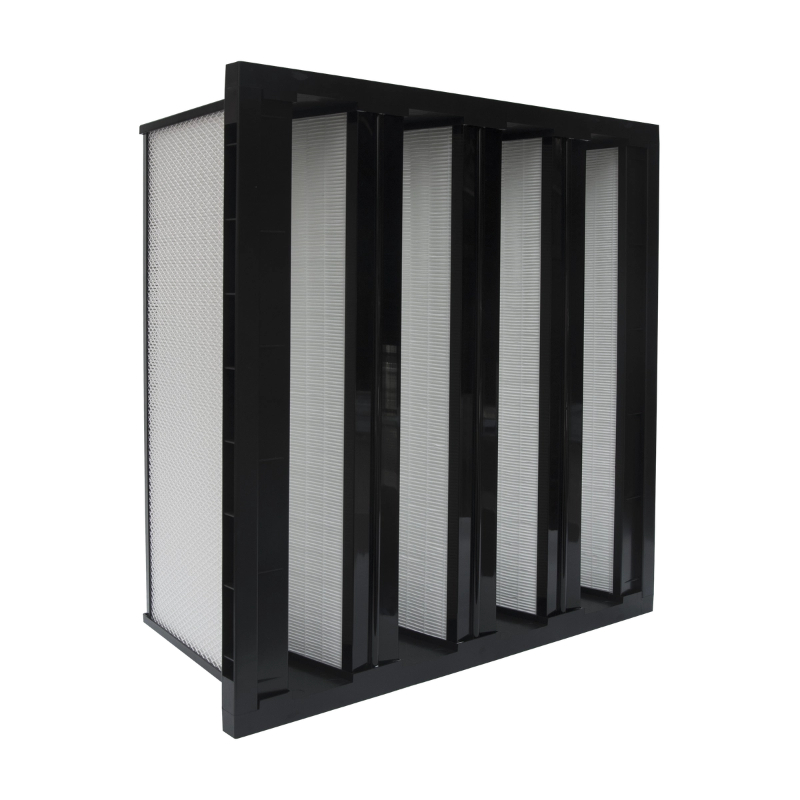
Filtros de bolsillo Los filtros de bolsa (también conocidos como filtros de mangas) son fundamentales para la filtración de sistemas HVAC de eficiencia media. Disponibles en grados F7, F8 y F9 (ISO 16890 ePM1 a ePM2.5), estos filtros ofrecen una alta capacidad de retención de polvo y una baja resistencia inicial, lo que los hace ideales como filtros secundarios para unidades de tratamiento de aire (UTA) y prefiltración en salas blancas. En KLC International, nuestros filtros de bolsillo están diseñados con fibra sintética de alta resistencia o fibra de vidrio para garantizar la integridad estructural incluso en condiciones de alto flujo de aire.
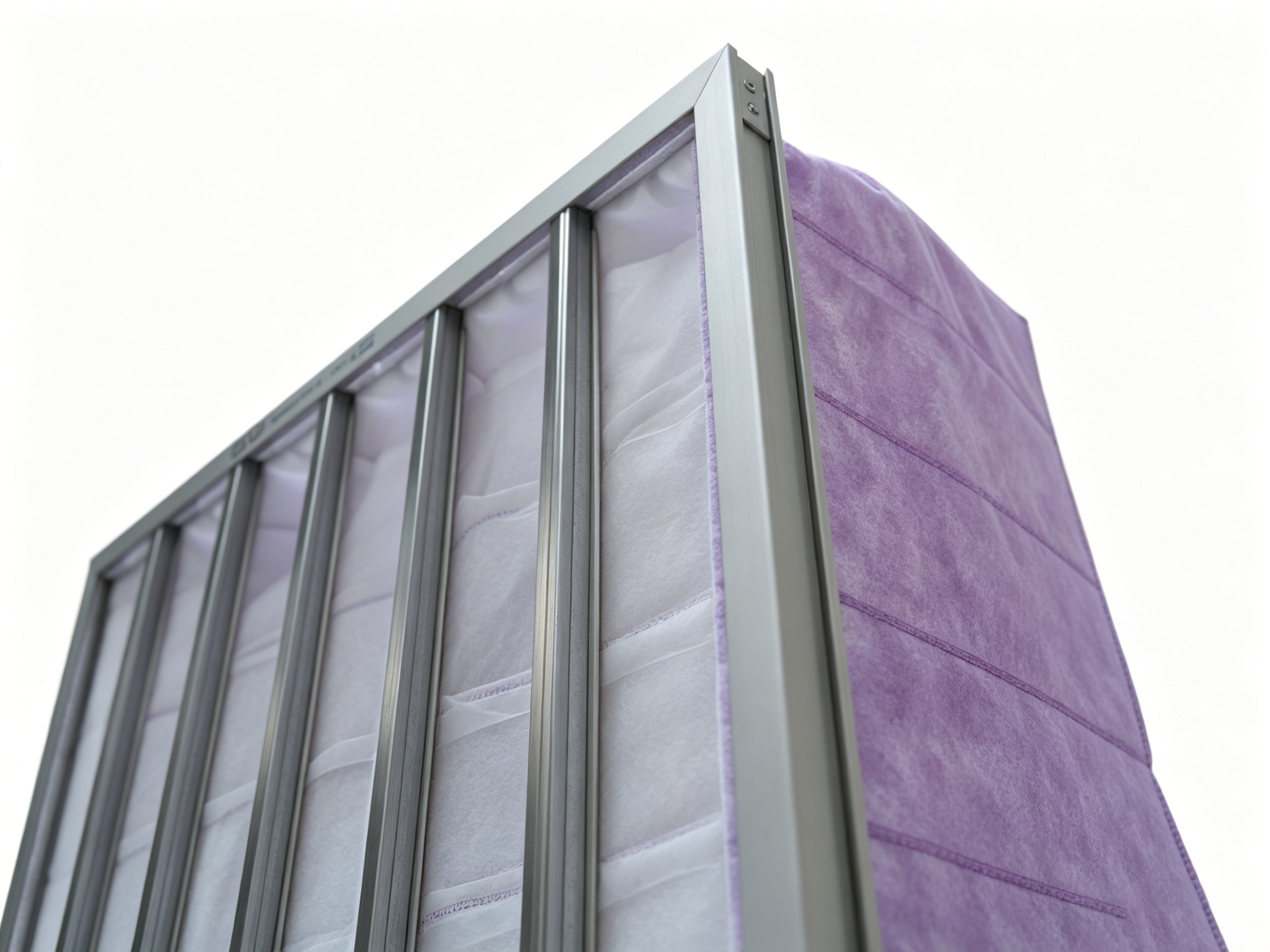
Datos técnicos de rendimiento (estándar 592x592 mm)
Parámetro | F7 (ePM1 50-65%) | F8 (ePM1 70-85%) | F9 (ePM1 >80%) |
Resistencia inicial | 60 – 80 Pa | 80 – 110 Pa | 110 – 150 Pa |
Resistencia final (Rec.) | 250 Pa | 300 Pa | 450 Pa |
Número de bolsillos | 6 – 8 | 6 – 10 | 8 – 12 |
Flujo de aire típico | 3400 m³/h | 3400 m³/h | 3400 m³/h |
Profundidad del bolsillo | 380 mm – 600 mm | 380 mm – 600 mm | 500 mm – 600 mm |
Comprender la curva de caída de presión
El rendimiento de un filtro de bolsillo se define por su Caída de presión frente a carga de polvo curva.
¿Por qué elegir los filtros de bolsillo KLC?
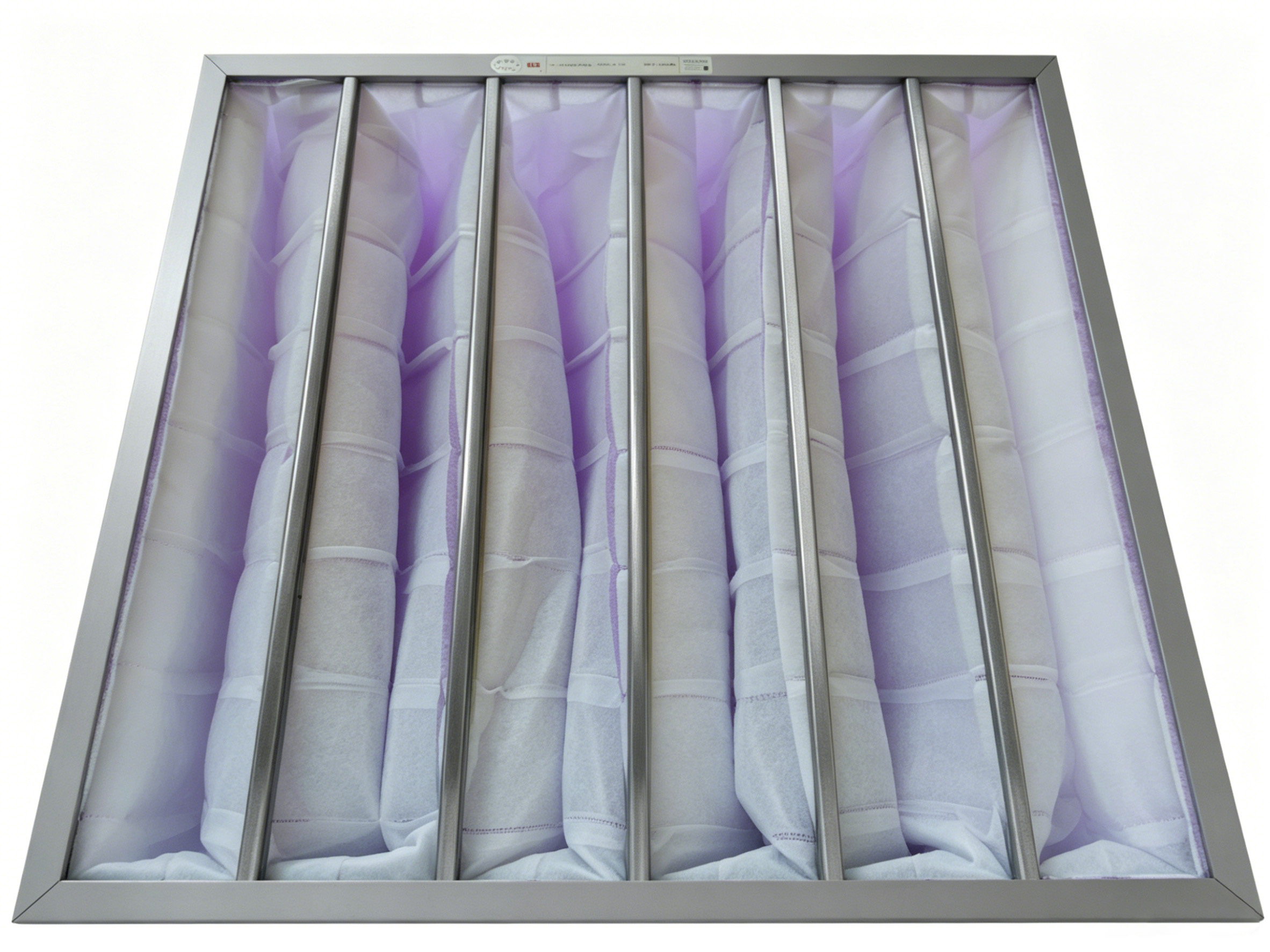
1. Bordes soldados por ultrasonidoNuestros bolsillos sintéticos están soldados por ultrasonidos para eliminar los orificios de las agujas y evitar el paso del aire.
2. espaciadores internosUtilizamos barras de sujeción internas para garantizar que cada bolsillo se abra completamente, maximizando así la superficie de filtración efectiva.
3. Marco de cabecera rígidoDisponible en acero galvanizado, plástico o aluminio (20 mm o 25 mm) para una fácil instalación en cualquier marca de unidad de tratamiento de aire (UTA).
Preguntas frecuentes: Preguntas frecuentes
1. ¿Cuál es la diferencia entre los filtros F7, F8 y F9?
La diferencia radica en la eficiencia. El filtro F7 captura aproximadamente entre el 50 % y el 65 % de las partículas PM1; el F8, entre el 70 % y el 85 %; y el F9, más del 80 %. El filtro F9 ofrece la mayor pureza del aire, pero con mayor resistencia.
2. ¿Con qué frecuencia se deben reemplazar los filtros de bolsillo?
Normalmente, cada 3-6 meses. Sin embargo, es recomendable controlar la caída de presión y reemplazarlas una vez que alcancen su resistencia final nominal.
3. ¿Qué es un filtro de bolsillo de fibra sintética?
Se trata de un filtro fabricado con un material sintético en capas, resistente a la rotura y a la humedad, a diferencia de la fibra de vidrio tradicional.
4. ¿Puedo lavar y reutilizar un filtro de bolsillo?
No. Los filtros de bolsillo son desechables. Lavarlos dañará la estructura de fibras finas y destruirá la eficacia de filtración.
5. ¿Por qué hay diferente número de bolsillos?
Un mayor número de cavidades proporciona una mayor superficie, lo que conlleva una menor resistencia inicial y una vida útil más larga, pero aumenta el coste de compra.
6. ¿Necesito un prefiltro antes del filtro de bolsillo?
Sí. Usar un filtro de panel G3 o G4 como prefiltro protegerá el filtro de bolsillo del polvo grueso, prolongando significativamente su vida útil.
7. ¿Los filtros de bolsillo KLC cumplen con la norma ISO 16890?
Sí. Todos nuestros filtros de climatización se someten a pruebas conforme a las normas ISO 16890 y EN 779:2012.
8. ¿Para qué sirve el diseño en forma de "V"?
La forma de V garantiza un flujo de aire uniforme en toda la profundidad del bolsillo, evitando que los bolsillos se aplasten y asegurando la plena utilización del espacio disponible.
Maximice el rendimiento de su unidad de tratamiento de aire (UTA).
Vista Especificaciones del filtro de bolsillo KLC o Solicite una tabla de caída de presión..



 Soporta red IPv6