¿QUÉ ESTÁS BUSCANDO?
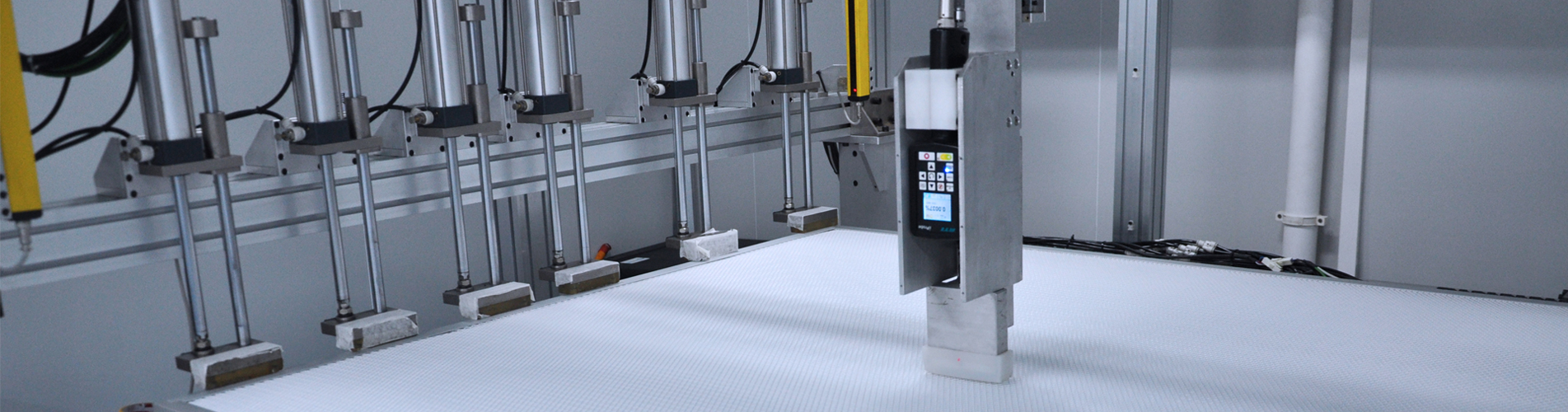
En la ingeniería de salas blancas médicas, la calidad del aire en el quirófano está directamente relacionada con la seguridad del paciente. Como dispositivo de purificación central, el método de instalación del HEPA terminal es crucial. Las instalaciones tradicionales de tipo dividido, debido a las múltiples juntas, se convierten fácilmente en caldo de cultivo para las bacterias, mientras que el diseño integrado del carcasa HEPA terminalResuelve fundamentalmente este problema.
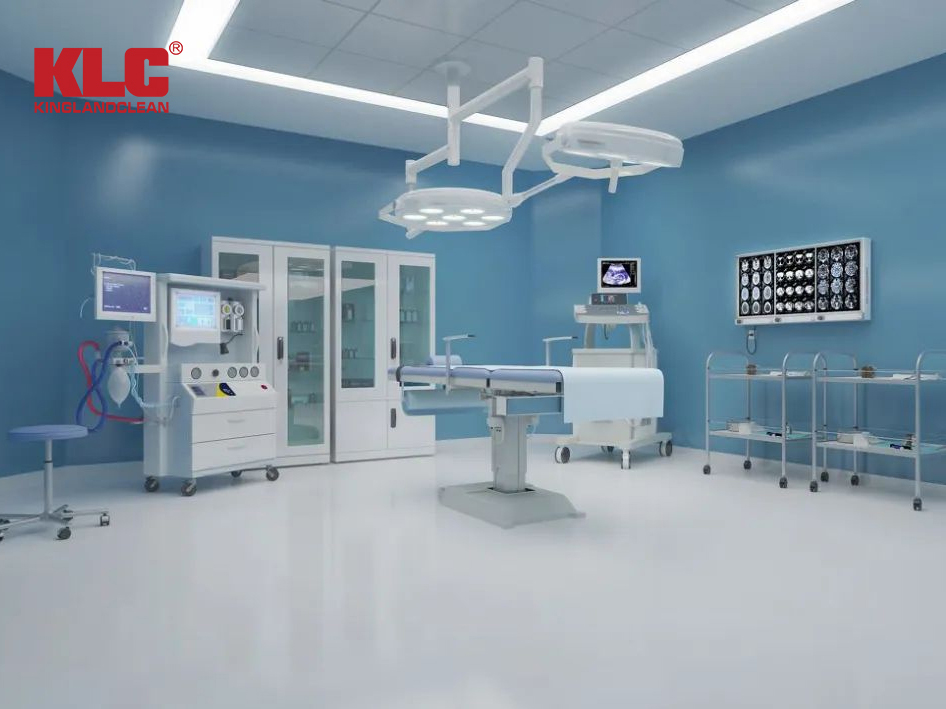
Filtros integrados de alta eficiencia, especialmente el unidad de filtro de ventilador (FFU)que integra la unidad de ventilador y filtro, combina perfectamente la caja del filtro HEPA y elunidad de filtro de ventilador (FFU)Este diseño elimina el riesgo de fugas causadas por las conexiones de brida y las juntas envejecidas en las instalaciones tradicionales, lo que garantiza la estanqueidad absoluta del techo de flujo laminar en el quirófano.
Su sensor de presión diferencial integrado monitoriza en tiempo real los cambios en la resistencia del filtro y, junto con un sistema de control inteligente, ajusta dinámicamente el flujo de aire, reduciendo significativamente el consumo energético y garantizando la limpieza. La carcasa está fabricada en acero inoxidable 304 con soldadura sin costuras y su superficie está pulida electrolíticamente para evitar la adhesión de microorganismos.
La instalación in situ requiere solo cuatro puntos de fijación, lo que reduce el período de construcción en un 60%, y permite la detección de fugas en línea y la sustitución modular, lo que reduce considerablemente la complejidad de la operación y el mantenimiento, así como el riesgo de tiempos de inactividad.
1. Los estrictos requisitos de hermeticidad en un entorno estéril.
Los quirófanos están sujetos a los requisitos de limpieza del hospital y deben cumplir con los más altos estándares de la norma ISO 14644. Incluso la más mínima fuga puede provocar niveles excesivos de bacterias en el aire, causando infecciones postoperatorias.
Eliminación de puntos de fuga: Los métodos de instalación tradicionales dan como resultado numerosas juntas entre el filtro y el marco, y entre el marco y el techo. Con el uso prolongado, estas juntas pueden desarrollar pequeñas grietas debido a la vibración y los cambios de temperatura, lo que permite que el aire sin filtrar entre directamente en el quirófano. El diseño integrado, a través de una pieza moldeada de una sola pieza Carcasa del filtro HEPA, reduce significativamente el número de costuras, garantizando la integridad del sistema.
Prevención de la acumulación y proliferación de polvo: El objetivo de los techos de flujo laminar es crear un flujo de aire unidireccional que expulse rápidamente los contaminantes. Si no se instalan herméticamente, el flujo de aire puede generar vórtices en las grietas, lo que provoca la acumulación de polvo. En ambientes húmedos, este polvo acumulado se convierte en un caldo de cultivo para las bacterias. Un sistema hepatobiliar integrado en el techo garantiza una transición fluida del flujo de aire, evitando zonas muertas.
2. Ventajas de instalación del diseño integrado
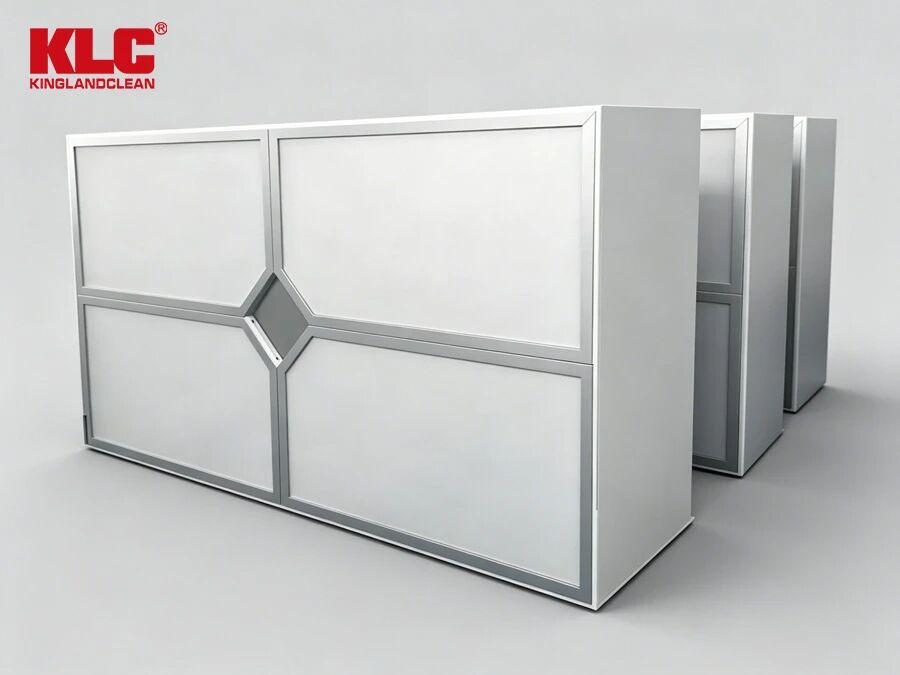
En la construcción real, el entorno del sitio es complejo y el ensamblaje tradicional en obra no puede garantizar una planitud y un sellado absolutos. Sin embargo, la integración Caja de filtro HEPA tipoo caja HEPA terminalse somete a pruebas rigurosas en la fábrica, tales como: Prueba de integridad del filtro HEPAy la prueba PAO, para garantizar que cumple con los estándares al salir de fábrica.
Instalación y mantenimiento rápidos: Las unidades integradas suelen emplear un diseño modular, como por ejemplo: techo suspendido lafLa instalación consiste simplemente en empotrarlos en las vigas del techo y conectarlos a una fuente de alimentación. Esto no solo acorta el tiempo de construcción, sino que también reduce el riesgo de fugas por una instalación incorrecta.
Resistencia estructural: La estructura general de la caja del filtro HEPA tiene una mayor rigidez, lo que puede prevenir eficazmente las fallas de sellado causadas por la deformación debida a la presión negativa.
3. Equilibrar rendimiento y eficiencia
Para mantener un ambiente de presión positiva en el quirófano, funa unidad de filtro (FFU)debe caracterizarse por bajo nivel de ruido y alta presión de aire. El diseño integrado permite a los fabricantes emparejar con precisión el ventilador y el filtro antes del envío, optimizando así el diferencial de presión del airey garantizando un consumo mínimo de energía al tiempo que se alcanza la Clase 100.
Además, algunas unidades integradas también incorporan unidades de filtro químicopara abordar la posible presencia de gases químicos en quirófanos especializados, formando un sistema de purificación compuesto para proteger aún más la salud del personal médico y de los pacientes.
En conclusión, el uso de filtros integrados de alta eficiencia en el techo de flujo laminar del quirófano representa no solo un avance tecnológico, sino también...



 Soporta red IPv6